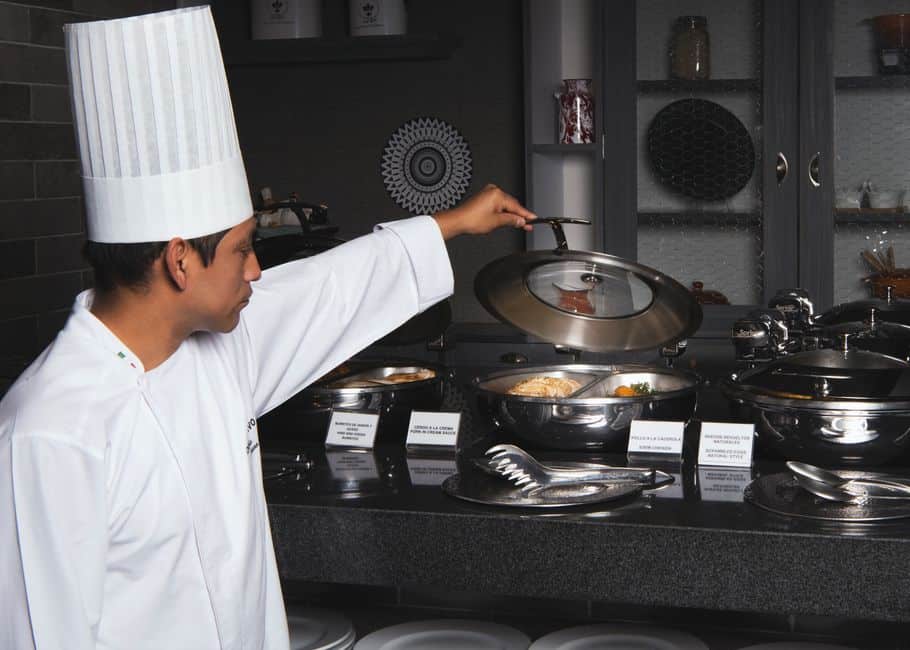
Food waste has quietly become one of the most strategic battlegrounds in hospitality. It impacts margins, staffing efficiency, brand credibility, and—more than ever—guest preference. The twist? The most effective solutions aren’t always the obvious “smaller portions” or “put up a sign.” They’re operational, data-driven, and surprisingly guest-friendly.
This roundup collects practical, underused tactics hotels and hospitality venues are applying right now to reduce waste without compromising experience. Each idea includes implementation tips and real-world context so you can test and scale what fits your property.
1) Turn breakfast into a “demand-shaped” service (not a fixed buffet)
Breakfast buffets are famous for high waste: unpredictable demand, guest psychology (“I’ll take a bit of everything”), and strict hold-time rules. A growing counter-trend is demand-shaped breakfast—keeping the buffet feel while producing closer to real consumption.
- Split the buffet into “always-on” and “on-request” zones: Keep shelf-stable and low-waste items self-serve (bread, whole fruit, sealed yogurts), while higher-waste items (hot proteins, pancakes, smoked fish) shift to small-batch replenishment or quick-serve stations.
- Use micro-batches: Replenish hot items in smaller pans more frequently rather than topping up large trays.
- Run a 15-minute rule: Train breakfast staff to check two numbers every 15 minutes: pan depth and guest flow. If arrivals drop, production drops immediately.
Practical metric: Track “kilos wasted per occupied room” (or per cover). Most teams only track cost, which hides the physical scale and makes it harder to improve.
2) Install a “waste lens” in your POS with three simple tags
Many hotels have POS data but don’t connect it to waste. You don’t need a complex system to start—just a lightweight tagging habit.
- Tag comps/returns: A server selects a reason code: “overcooked,” “wrong order,” “guest changed mind,” “timing.”
- Tag prep waste: Kitchen logs waste against a station: “breakfast,” “banqueting,” “lounge,” “staff canteen.”
- Tag end-of-service leftovers: “safe to repurpose,” “donate,” “discard.”
After two weeks, patterns emerge fast: one menu item generates disproportionate returns, one station consistently over-preps, or one shift mis-times production.
Actionable tip: Make the tags non-punitive. The goal is visibility, not blame. Teams will only log honestly if it doesn’t feel like a performance trap.
3) Banqueting: Replace “per head” forecasting with scenario forecasting
Functions and conferences often create the highest waste because guarantees are conservative and planners fear running short. A more precise approach is to forecast by scenarios rather than a single per-head assumption.
- Create three historical profiles: “High consumption,” “average,” “light.”
- Match profiles to event type: All-day workshop with early start typically consumes more coffee/pastries than an afternoon reception.
- Build flexible menus: Choose one item that can be held and repurposed safely (e.g., a soup base for staff dining) to absorb demand uncertainty.
Real-world example: Properties that shift to scenario forecasting often reduce “just in case” production at coffee breaks—one of the most wasted touchpoints—without increasing guest complaints (because replenishment becomes smarter, not scarcer).
4) Adopt “trim-to-value” prep standards (and train them like a brand standard)
Knife skills and prep habits can quietly waste thousands annually. “Trim-to-value” means defining what “acceptable trim” looks like for your property and training it consistently.
- Standardize yield targets: Example: onions at 88–92% yield, salmon portions with defined trim rules, herbs picked with minimal stem length.
- Weigh trim for one week: Pick 5 high-volume ingredients and weigh trimmings daily. You’ll find the biggest offenders quickly.
- Create secondary uses: Vegetable trim becomes stock; citrus peels become syrup or oleo-saccharum; bread ends become croutons.
Operational insight: Training here is culture-building. When teams see prep as value protection—not just speed—they naturally reduce waste.
5) Make “smaller plates” feel premium (design matters)
Smaller plates reduce buffet waste, but if it feels stingy, guests notice. The best executions rely on design and flow, not just plate diameter.
- Use deeper plates and bowls: They feel abundant with less food.
- Upgrade plating cues: Provide small tongs, ramekins, and composed “mini portions” so guests take curated servings rather than random piles.
- Re-route the buffet journey: Put salads/fruit first, indulgences later. Guests fill up earlier with lower-waste items.
Guest psychology tip: Add one “made-to-order” anchor (omelette, coffee bar, waffles). Guests are less likely to over-serve when they know a fresh option exists.
6) Use “closing recipes” to convert leftovers into sellable specials—safely
One of the most overlooked waste reducers is a structured end-of-day playbook. “Closing recipes” are pre-approved, food-safe transformations of safe leftovers into next-day specials.
- Examples: Roast veg into soup; surplus rice into arancini; breakfast pastry into bread-and-butter pudding; grilled chicken into lunch wraps.
- Set a cut-off time: Identify what can be cooled, labeled, and held safely within HACCP guidelines.
- Price strategically: Specials should be attractive but not devalue your menu. The aim is sell-through, not discount branding.
Control point: Write the closing recipes as if they’re standard menu items—ingredients, hold times, allergens, and plating—so quality remains consistent.
7) Tap into public awareness with transparent messaging (without guilt-tripping)
Guests increasingly care about waste, but they don’t want a lecture with breakfast. The most effective messaging is simple, positive, and tied to quality.
- Try: “We cook in small batches for freshness—please come back for seconds.”
- Share one data point: Mentioning the scale of food waste can motivate guests subtly. For broader context and reporting on food waste in the UK and beyond, consult coverage from The Guardian’s reporting on food waste.
- Highlight outcomes: “Last month we reduced buffet waste by 18% by switching to small-batch cooking.”
Important: Avoid language that frames guests as the problem. Position your approach as a freshness and quality commitment.
8) Staff dining: treat it as a waste-reduction channel, not an afterthought
Staff dining can be one of the smartest, most dignified ways to reduce edible waste—if it’s planned rather than incidental.
- Create a “staff menu slot”: One rotating item daily that intentionally uses safe surplus (e.g., soup, pasta bake, curry).
- Track uptake: If staff aren’t eating it, it becomes waste anyway. Run quick feedback: “too repetitive,” “not filling,” “not appealing.”
- Protect brand standards: Staff meals shouldn’t feel like scraps. When it’s tasty, uptake increases and waste drops.
Bonus benefit: Better staff dining can support retention—an indirect but very real financial win in hospitality.
9) Donation and redistribution: make it operationally easy or it won’t happen
Donation sounds straightforward until the shift is busy, labeling is unclear, or collection logistics fail. The best programs succeed because they’re designed for real-life operations.
- Set “donation-ready” standards: What foods qualify, how they’re cooled, packaged, labeled, and stored.
- Schedule pickups: Random pickups cause missed handoffs. Fixed schedules create habit.
- Assign ownership: One role (e.g., duty manager or sous chef) owns the checklist each day.
Risk management tip: Work with reputable partners and follow local regulations. Document procedures so the process is auditable and consistent.
Conclusion: Small operational shifts create big hospitality wins
Reducing food waste isn’t a one-off initiative—it’s a system. The most effective hotels combine data visibility, small-batch production, thoughtful buffet design, and planned repurposing to protect margins while improving freshness and guest experience.
If you want a practical starting point, choose two tactics for the next 30 days: one front-of-house (like demand-shaped breakfast) and one back-of-house (like trim-to-value or closing recipes). Measure waste by weight, review weekly, and adjust. In hospitality, consistency beats grand gestures—and the results show up faster than most teams expect.