Why “where you sleep” is now a strategy decision
Accommodation choices used to be a simple trade-off: hotel comfort versus apartment space. In 2026, the decision is more tactical. Hybrid work, longer leisure trips, “workations,” family travel, and rising urban costs have made the lodging format you choose a major factor in productivity, wellbeing, and total spend—not just nightly rate.
This comparison focuses on three increasingly relevant options: traditional hotels, serviced apartments, and aparthotels (a hybrid that blends hotel services with apartment-like features). You’ll learn what each does best, where the hidden costs appear, and how to pick the right one based on stay length, work needs, and lifestyle.
The three formats at a glance
1) Traditional hotels
Hotels prioritize consistency: front desk support, daily housekeeping, on-site amenities, and standardized rooms. They often excel at short stays, high-service expectations, and travelers who want everything handled.
2) Serviced apartments
Serviced apartments typically offer a full kitchen, separate living area, laundry access (in-unit or on-site), and more residential layouts. Housekeeping is usually weekly (or optional) rather than daily. This model is designed for longer stays and travelers who want control over meals and routines.
3) Aparthotels
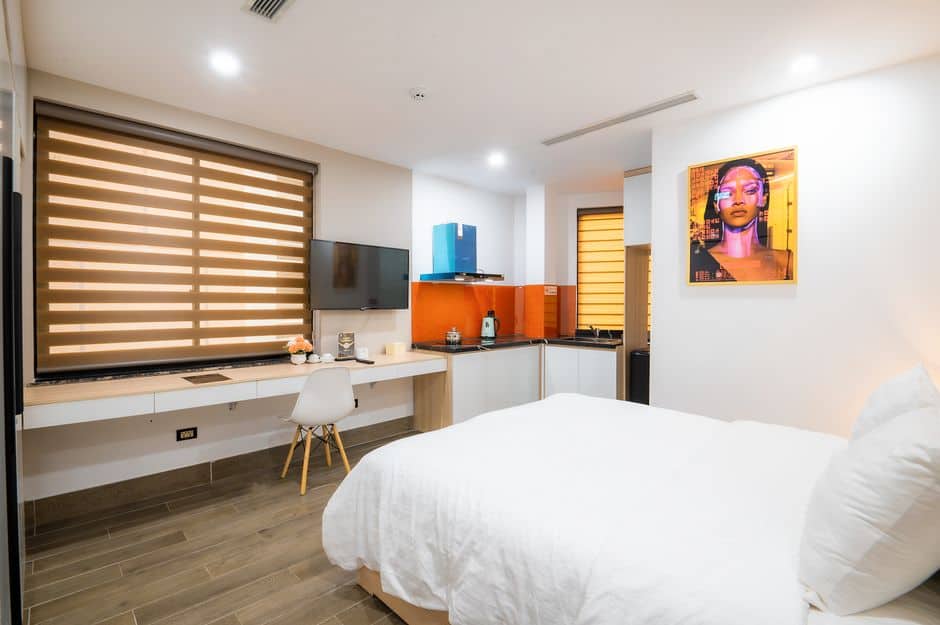
Aparthotels aim to deliver “hotel convenience + apartment functionality.” Expect a kitchenette or kitchen, a small living area, and hotel-like touchpoints such as a reception desk, cleaning schedules you can adjust, and sometimes on-site breakfast or a gym.
Comparison #1: Total cost of stay (not just nightly price)
Nightly rates can mislead. The real cost picture changes when you add meals, laundry, parking, and the opportunity cost of time.
- Hotels: Higher nightly rates in many markets, plus food and beverage costs can stack fast. Parking and “resort/destination” fees may apply. On the upside, you save time—no grocery runs, no dishwashing, no coordination.
- Serviced apartments: Often deliver the best cost efficiency after about 5–7 nights because kitchen access reduces meal spend and laundry reduces outsourcing. Watch for cleaning fees, security deposits, and utilities policy (some include, some cap usage).
- Aparthotels: Typically sit in the middle. A kitchenette can materially cut breakfast and simple meal costs, while on-site support reduces friction when issues arise.
Actionable cost tip: For any stay over a week, estimate your per-day food cost under each option. Many travelers undercount it. A realistic baseline in major cities is often $25–$60/day per person for modest eating out. Even partial self-catering (breakfast + a few dinners) can move your total budget dramatically.
Comparison #2: Space, sleep quality, and “livability” for longer stays
If you’re staying longer than a weekend, layout matters as much as location.
- Hotels: Great beds and blackout curtains are common, but rooms can feel tight. If you’re working, the desk setup might be an afterthought (or double as a dining table).
- Serviced apartments: Usually win on livability: separate rooms, couch comfort, real dining surfaces, and more storage. This reduces “living out of a suitcase” fatigue.
- Aparthotels: Many offer smart layouts (studio + kitchenette) but vary widely. Some feel like upgraded hotel rooms; others are closer to small apartments.
Real-world example: A consultant on a three-week assignment often benefits from a serviced apartment purely due to routine: a dedicated workspace in the living area, laundry mid-week, and a kitchen that prevents constant eating out. Meanwhile, a two-night conference attendee will likely prefer a hotel for seamless check-in/check-out and proximity to the venue.
Comparison #3: Remote-work readiness (Wi-Fi, desk ergonomics, and noise control)
Remote work has turned “internet speed” into a primary amenity. Yet listings and hotel pages still often give vague promises.
- Hotels: Can be excellent for connectivity—especially business-focused brands—but congestion at peak hours and captive portal hassles are common. Some hotels still upsell “premium Wi-Fi.”
- Serviced apartments: Wi-Fi quality varies widely by operator and building infrastructure. The upside is you may get a quieter environment and the ability to set up a multi-day workstation.
- Aparthotels: Often designed with longer stays in mind, so you may find better desk setups than traditional hotels, plus lobby areas for a change of scene.
Actionable work-readiness checklist:
- Ask for a measured speed test (download/upload) rather than “fast Wi-Fi.”
- Confirm whether the Wi-Fi is private per unit or shared across the building.
- Request a quiet-facing unit (courtyard vs street) and ask about construction nearby.
- If you take video calls daily, prioritize upload speed and ask about router placement.
Comparison #4: Flexibility, policies, and risk management
Flexibility has become a competitive advantage. Travelers are increasingly booking with change-friendly terms, especially for longer stays.
- Hotels: Often have clearer cancellation policies and 24/7 staff. Loyalty programs can add value (late checkout, upgrades).
- Serviced apartments: Policies vary: some are hotel-like, others are closer to residential leases with stricter cancellation terms. Deposits and ID checks are more common.
- Aparthotels: Frequently blend hotel-style flexibility with longer-stay pricing, but always confirm minimum-stay requirements and cleaning schedules.
Actionable risk tip: For stays longer than 10 nights, ask what happens if you need to leave early. The difference between “pay for nights used” versus “non-refundable long-stay rate” can be substantial.
Comparison #5: Amenities that actually change your experience
Amenities are easy to overvalue on the booking page and undervalue in real life. Focus on what you’ll use repeatedly.
- Hotels: Daily housekeeping, concierge services, gyms, room service, on-site restaurants, and business services are common. Great for travelers who want a frictionless stay.
- Serviced apartments: “Amenities” often mean practical comforts: full-size fridge, oven, washer/dryer access, and a real wardrobe. Some buildings also include gyms or co-working lounges, but it’s less standardized.
- Aparthotels: Often have the most relevant middle-ground amenities: reception, luggage storage, and periodic cleaning—plus the basics of a small kitchen.
Practical example: For families, a kitchen isn’t just a budget tool—it’s a stress reducer. Being able to prepare a familiar breakfast or store snacks can prevent multiple daily “food missions.”
A decision framework: choose based on stay length + purpose
If you’re staying 1–3 nights
- Best default: Hotel
- Why: High service, speed, predictable standards, minimal setup
- When to pick an aparthotel instead: If you want a kitchenette for dietary reasons or late arrivals
If you’re staying 4–10 nights
- Best default: Aparthotel
- Why: You start benefiting from a kitchen and more space without giving up support
- When a hotel still wins: Event-heavy schedules where you’ll barely be in the room
If you’re staying 11+ nights
- Best default: Serviced apartment
- Why: Livability, laundry, full kitchen, and a routine-friendly environment
- When an aparthotel wins: If you need front-desk support, frequent linen changes, or a central “hotel” location
What’s trending now: “value per square meter” and the rise of hybrid stays
One of the clearest accommodation trends is that travelers are optimizing for value per square meter and daily functionality—not just a nightly deal. People are mixing formats within the same trip (e.g., two nights in a hotel for meetings, then ten nights in an apartment-style stay for focused work). This is especially common among remote workers and international travelers dealing with jet lag and longer itineraries.
For broader reporting on how travel and lodging patterns continue to evolve—including pricing pressures and shifting traveler behavior—see ongoing coverage from The New York Times travel section.
Booking tactics that consistently improve outcomes
- Request the right unit, not just the right category: “High floor, away from elevator, courtyard-facing” can matter more than an “upgrade.”
- Ask about cleaning cadence: Weekly cleaning may be fine, but confirm towel/linen policies to avoid surprise fees.
- Confirm kitchen inventory: A “kitchenette” might mean a microwave and mini-fridge. If you plan to cook, ask whether there’s a hob, oven, pots, and a real knife set.
- Audit fees before booking: Parking, resort fees, service charges, cleaning fees, and deposits can flip the best-looking deal.
- Do a commute test: Check walking time to transit and your key destinations at the hours you’ll actually travel.
Conclusion: Pick the format that matches your friction points
The smartest accommodation choice is the one that reduces friction for your specific trip. Hotels win when you need speed, service, and predictable standards. Serviced apartments win when you need a real routine, space, and cost control over longer stays. Aparthotels are the strategic middle ground—often ideal for multi-night trips where you want some independence without losing front-desk support.
Before you book, write down the top three realities of your stay—work calls, family routines, dietary needs, event schedule, laundry, noise sensitivity—and choose the lodging type built to handle them. That’s how you turn accommodation from a line item into an advantage.