Why “third-place stays” are suddenly the accommodation trend worth knowing
Hotels and short stays used to be simple: you sleep, shower, leave. But travelers are quietly shifting toward something more specific — accommodation that feels like a “third place.” Not home, not work… but a comfortable in-between where you can settle in for a few hours, meet people (or avoid everyone), and still feel like you belong.
It’s an evergreen need with a modern twist. More people are working flexibly, arriving earlier, staying longer, and expecting spaces that support real life: calls, workouts, quiet reading, social time, decent coffee, and a sense of local character — all without the price tag of premium suites.
This roundup pulls together practical, real-world tactics for booking (or choosing) accommodation that delivers that third-place vibe. These are the little details that separate “a bed for the night” from “I could actually stay here awhile.”
Roundup: 15 tips, checks, and resources for booking a third-place-style stay
1) Search for “lobby culture,” not just room size
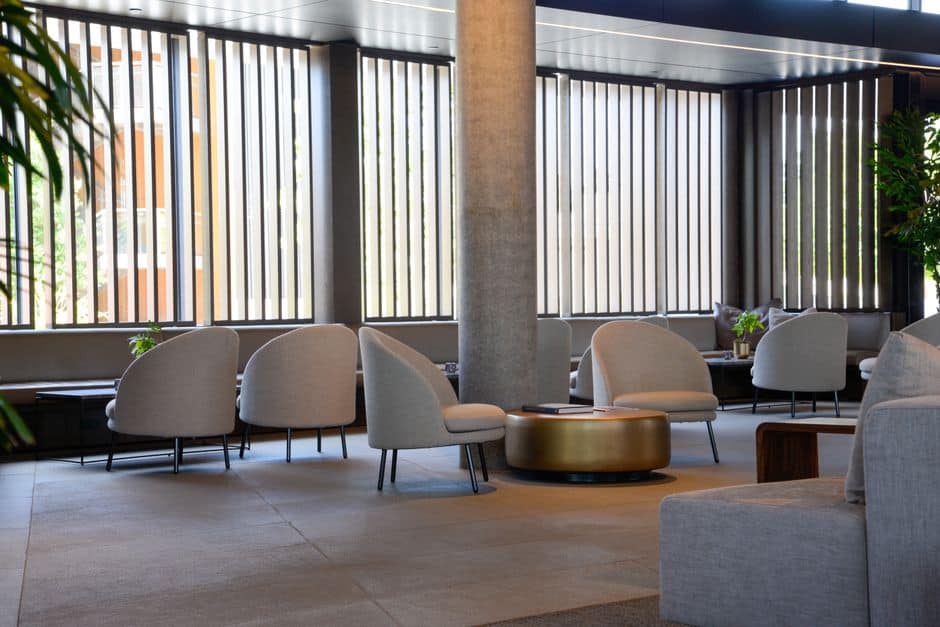
When you compare properties, don’t stop at room square meters. Scan reviews for clues that the shared spaces are usable: “spent the afternoon in the lobby,” “worked comfortably,” “nice to read downstairs,” “great bar seating.” These phrases often indicate the property has intentionally designed common areas for lingering — a hallmark of third-place stays.
- Actionable check: Filter reviews for keywords like “lobby,” “work,” “quiet,” “outlets,” “seating,” and “coffee.”
- Quick win: Look at guest photos — they’re usually more honest than staged marketing images.
2) Prioritize “useful seating” over “stylish seating”
That gorgeous velvet chair might look great on Instagram, but can you sit in it for 45 minutes without regret? If you want a stay that feels livable, you need seating that supports actual human behavior.
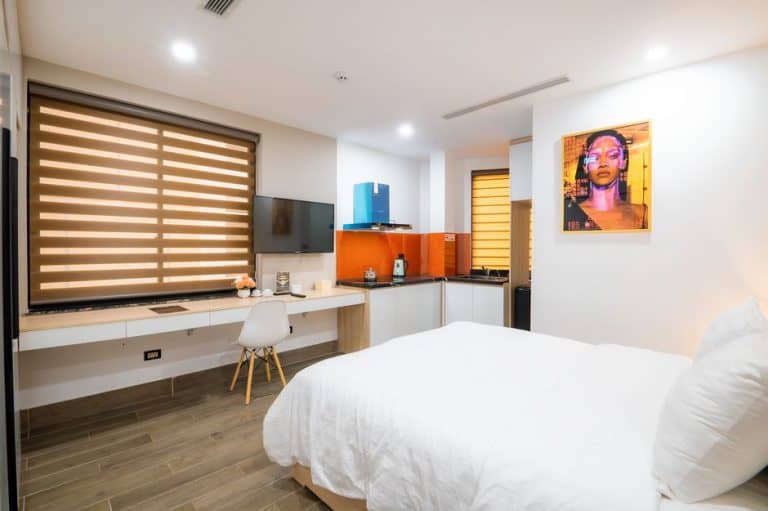
- Actionable check: Does the room have a chair with a real backrest and a surface (desk or table) that’s laptop-friendly?
- Real-world example: Many mid-range business hotels include functional desks, while some boutique properties trade desks for design pieces. Decide what matters for your stay.
3) Ask one pre-booking question: “Where are the power outlets?”
This sounds trivial until you’re balancing your phone on a windowsill because the only outlet is behind the bed. Outlets are a hidden predictor of comfort — especially if you’re working, traveling with kids, or charging multiple devices.
- Actionable check: Message the property and ask whether there are outlets by the bed and near a desk/table.
- Bonus tip: Pack a short extension lead or a multi-port USB charger. It’s a small item with an outsized impact.
4) Use noise as your deal-breaker filter
A third-place stay fails if you can’t sleep or focus. Noise is one of the most frequent accommodation complaints — and it’s often predictable.
- Actionable check: Ask for a room away from lifts, ice machines, and street intersections. If the property has internal courtyards, request those.
- Data point to guide you: Road traffic noise can spike dramatically at peak hours; if you’re a light sleeper, prioritize buildings set back from main roads.
5) “Late checkout value” often beats “breakfast included”
Breakfast is nice, but late checkout can be life-changing — especially if you’re arriving early, working remotely, or dealing with awkward train times. Often, you can pay a modest add-on fee and gain a calm extra hour (or two) to shower, work, or decompress.
- Actionable check: Compare the cost of late checkout vs. the local cost of finding a café you can sit in for hours.
- Real-world example: If late checkout costs $20–$40, it may beat buying multiple coffees and a snack just to keep a table elsewhere.
6) Pick properties that “program” their public spaces
Some stays put effort into creating gentle, optional social energy: trivia nights, wine tastings, live acoustic sets, local pop-ups, book swaps. You don’t have to join — but the presence of programming usually signals a more welcoming, lived-in environment.
- Actionable check: Look for an events calendar on the property website or social channels.
- Tip: Even one low-key event per week can change the feel of the entire building.
7) Check for “third-place amenities” hiding in plain sight
The best value amenities aren’t always the flashy ones. The quiet winners:
- Refill water stations (saves money and reduces plastic bottle clutter)
- Guest laundry or affordable laundry service (crucial for longer stays)
- Shared kitchenettes or microwaves (especially in aparthotels)
- Secure luggage storage (turns travel days into usable days)
These features can make a stay feel more like a “base” and less like a pit stop.
8) Use “walkability math” to avoid transport surprises
Third-place stays work best when the area supports wandering: parks, corner shops, cafés, transit, and safe streets. Instead of relying on vague descriptions like “close to everything,” do a 3-minute planning exercise:
- Actionable check: Map your must-do spot (conference venue, attraction, family address). Then check walking time to: a grocery store, a café, and a transit stop.
- Rule of thumb: If all three are within a 7–10 minute walk, the neighborhood usually feels “usable” day-to-day.
9) Look for signs of climate resilience (yes, even for short trips)
Heatwaves and unpredictable weather are changing what “comfortable accommodation” means. Practical comfort now includes reliable cooling/heating and airflow. For context on how heat is impacting daily life (and why accommodation comfort is evolving), resources like BBC climate coverage are a helpful starting point.
- Actionable check: Confirm air conditioning (or heating) details in the room description — “available” isn’t the same as “in-room and effective.”
- Tip: If you’re sensitive to heat, request a higher floor only if the building has strong cooling; otherwise, mid-level floors can be more stable temperature-wise.
10) Choose “soft boundaries” over total isolation
Third-place stays excel when you can be around people without being forced into socializing. Think: a lobby with quiet corners, a courtyard with spaced seating, a lounge with different zones.
- Actionable check: In photos, look for varied seating types: communal tables and small two-tops and tucked-away chairs.
- Why it matters: Zoning lets you switch modes: focused, social, relaxed.
11) Use review patterns, not review scores
A property can have a decent score and still be wrong for you. Instead of obsessing over 8.6 vs. 9.1, scan for patterns that match your priorities.
- Actionable check: Read the newest 15–20 reviews and note repeated mentions: “thin walls,” “amazing staff,” “noisy bar,” “excellent Wi‑Fi,” “comfy beds.”
- Tip: If three different guests mention the same issue, assume it’s real.
12) Don’t assume Wi‑Fi quality — verify it like a grown-up
“Free Wi‑Fi” is meaningless if it drops during calls. If you need stable internet, treat it as a booking requirement, not a bonus.
- Actionable check: Ask whether the Wi‑Fi is property-wide or room-only, whether there’s a bandwidth cap, and if upgrades are available.
- Real-world workaround: If you have crucial meetings, consider a backup plan (mobile hotspot) and test it immediately on arrival.
13) Consider “micro-upgrades” that change everything
If your budget is tight, don’t jump straight to a higher room category. Sometimes the best value is a targeted micro-upgrade:
- Pay for a quieter room location
- Add breakfast only on days you’ll actually use it
- Book parking ahead if driving (often cheaper pre-arrival)
- Upgrade to a room with a small sofa or table if you’ll spend time inside
These small choices can create a third-place feel without the full “luxury” price.
14) Build a “two-café backup list” near your stay
Even great properties have off days: busy lobbies, events, limited seating. The third-place mindset includes flexibility.
- Actionable check: Before arrival, save two nearby cafés: one quiet (work-friendly) and one lively (people-watching).
- Tip: Look for places that mention “laptop friendly,” “all-day breakfast,” or “workspace.”
15) If you’re traveling as a couple or family, split needs early
Third-place stays shine when everyone’s needs are considered. One person may value silence, another wants a gym, another needs a kitchenette. Write a quick “top 3 must-haves” list per traveler and pick the overlap.
- Actionable check: Decide one non-negotiable each (e.g., quiet room, laundry access, walkability) and one nice-to-have each.
- Real-world example: A family might prioritize laundry + fridge + safe walkability over an on-site restaurant they’ll use once.
Conclusion: book the stay that supports your actual day, not just your night
The best accommodation experiences aren’t always about luxury — they’re about livability. Third-place stays are trending because they match the way people travel now: more flexible schedules, more blended work/leisure time, and a stronger desire for places that feel human.
If you remember only one thing, make it this: choose a stay that has at least one comfortable shared space, predictable quiet, and the practical basics (outlets, Wi‑Fi, walkability). Those features add up to a trip that feels calmer, easier, and genuinely more enjoyable — without automatically spending more.